
“We tried!”
That was Belle da Costa Greene’s answer when asked whether she had been J.P. Morgan’s mistress. Head thrown back. Eyes bright. Not a flicker of embarrassment. In a city where a woman’s worth was measured entirely by her respectability, Belle looked the question in the eye and laughed.
She was extraordinary. And she was hiding in plain sight.
Her name at birth was Belle Marion Greener. Her father was Richard T. Greener, the first Black man to graduate from Harvard University. A civil rights activist who believed the only way forward was to fight openly, without apology. Her mother looked at the same world and made a different calculation. She gathered her children, changed the family name from Greener to Greene, inserted da Costa – a gesture toward Portuguese ancestry, vague enough to withstand casual scrutiny – and left the father behind. Belle Marion Greener walked out of one life and into another.
She never walked back.
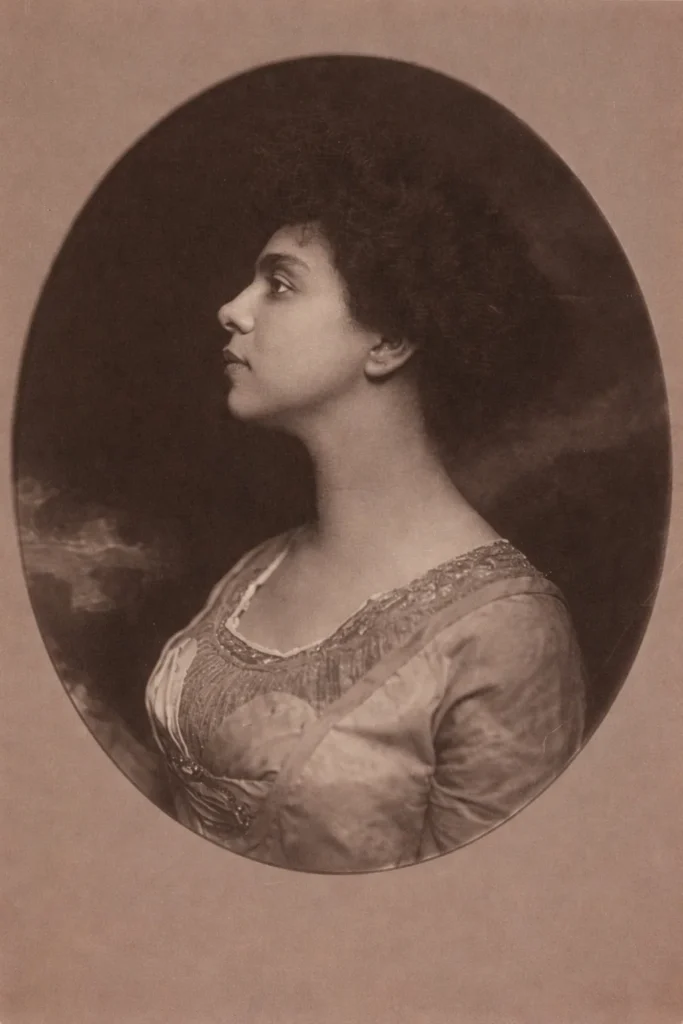
In 1905, J.P. Morgan hired her to organise his collection of rare books, manuscripts, and artwork. She was in her mid-twenties. No formal degree. What she had was a mind so precise and so effortlessly authoritative that within months she was negotiating with the greatest dealers and collectors in Europe as Morgan’s personal representative – outbidding, outmanoeuvring, and occasionally outcharming people who had spent their entire careers in those rooms. Her letters reveal an indefatigably witty, puckish soul who savoured books and art, loved gossip, and had an insatiable appetite for life. She dressed flamboyantly. She said exactly what she thought. She became, in the estimation of her contemporaries, the most interesting woman in New York.
And every single day of it, she was one careless word away from losing everything.
In 1909, she met Bernard Berenson, an art historian, married, and within weeks, was hopelessly entangled with her. They enjoyed a sweeping romance that cooled into a decades-long friendship, corresponding for four decades in thousands of pages of extraordinary personal writing. Nearly six hundred letters from Belle to Berenson survive today. She destroyed his letters to her. She destroyed almost all her personal papers before she died. She spent her whole life making sure the truth could never catch her.
In 2009 – nearly sixty years after her death – a steamer trunk full of her father’s papers was discovered. And through those papers, finally, the world found her.
She couldn’t burn everything after all.
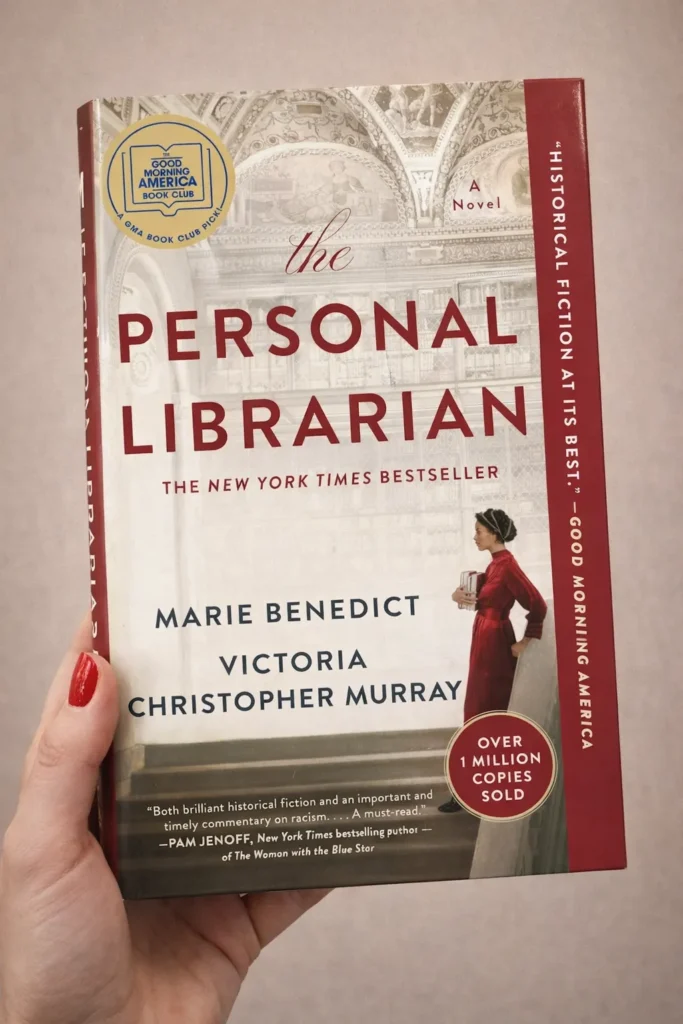
The Personal Librarian by Marie Benedict and Victoria Christopher Murray is her story. And before anything else, I need to tell you how it was made. Benedict – a white woman – knew immediately she could not write a Black woman’s story alone. She found Victoria Christopher Murray, whose own grandmother had lived through the same era and understood from the inside what it cost a Black woman in America to perform whiteness as a survival strategy. That act of humility is woven into every page. And it shows – in the quality of the emotional truth, in the texture of Belle’s interiority, in the scenes that could only have been written by someone who did not have to imagine the fear from scratch.
What the novel holds, with extraordinary precision, is two things simultaneously. Belle’s triumph – the collection she built, the institution she willed into existence, the $50,000 Morgan left her in his will, testament to a man’s recognition of what she had given him. And the cost. Every achievement threaded with the terror of exposure. Every friendship built on a foundation that could crack without warning. Every love affair conducted in the shadow of a truth she could never fully share.
One honest note, though, the fictional Belle is somewhat sanitised. The real Belle was wilder, more complicated, more fully in possession of herself than the novel captures and the simplifications required to make a life narratable always cost something. This is not a perfect book. But it does something no biography quite can: it makes you feel it. The sustained, decades-long exhaustion of being someone you are not. The loneliness of succeeding in rooms that would destroy you if they knew your truth. The question that must have visited her in the small hours – not will they find out, but something quieter and more devastating: if they knew, would any of this have been allowed to matter?
She believed the answer was no. She stayed silent even near the end of her life because she feared that if the truth emerged, the Morgan Library – the institution she had spent forty years building – would be diminished. She chose the legacy over the truth. And she carried that choice to her grave.
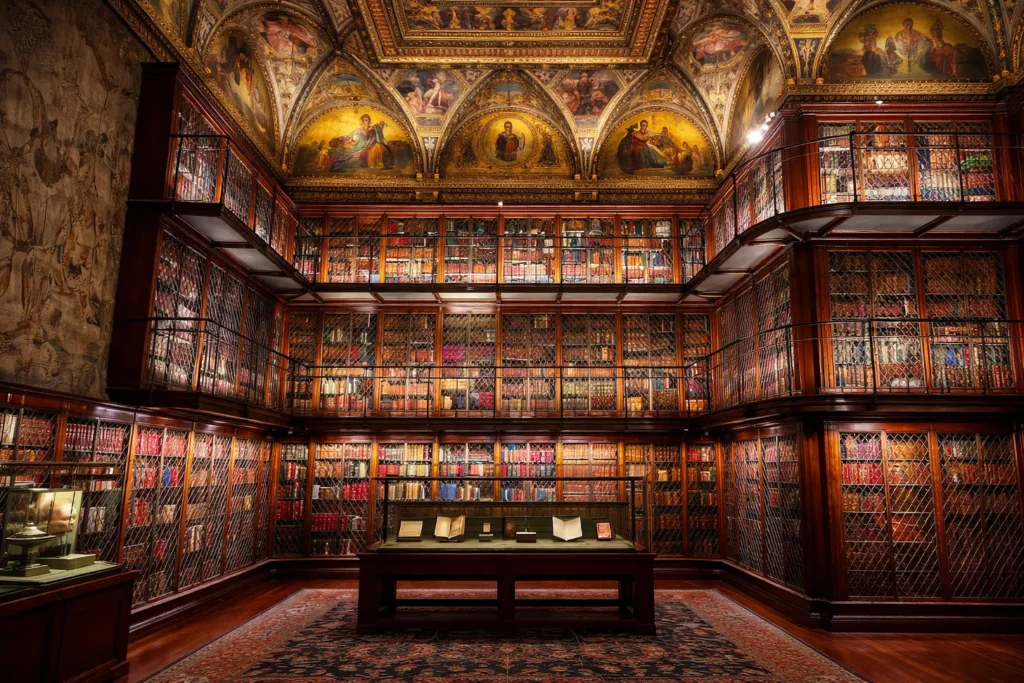
If you are ever in New York, go to the Morgan Library ( a section of it is pictured above). Stand in front of the Da Vinci notebooks, the Shakespeare folios, the Gutenberg Bible. Run your eyes along the walls of a collection assembled by a woman who was not supposed to exist in those rooms – who would have been turned away at the door if the truth had been visible – and who shaped them anyway.
Her name was Belle da Costa Greene. She hid in plain sight for forty years so that those rooms would exist for you.
The rooms are still there.
That she could not burn.
Read this novel. Then find the real Belle – in Heidi Ardizzone’s biography An Illuminated Life, in the six hundred letters preserved at Villa I Tatti in Florence, in the Morgan Library itself. The novel is the door. The woman behind it is the whole house.
She deserves to be known. Fully. Without the mask.
It is the least we can do.
Have you visited the Morgan Library? Did you know about Belle before this book? Leave a comment. We read everything.