
The year my father died, I stopped reading.
I’d been a reader all my life, the girl with a book under the desk, the woman with one in her handbag. But grief did something to the words. I’d open a novel, read the same sentence four times, and close it. Stories felt like noise. Other people’s lives felt like an insult. Why should anyone on a page get to be fine when he wasn’t here?
Then a friend left a paperback on my doorstep. No note. Just a sticky label on the cover that said: Trust me.
It was Bel Canto.
I almost gave it away. A hostage crisis at a birthday party in South America? I didn’t have the strength for violence. But one night, unable to sleep, I opened it. And somewhere around the point where the captors and the captives start teaching each other to cook, to play chess, to sing, I realised I had read fifty pages without once thinking about the hospital.
I cried when I finished it. Not for my father. For them. And it was the first time in months I had cried for anything that wasn’t my own loss. That felt like coming up for air.
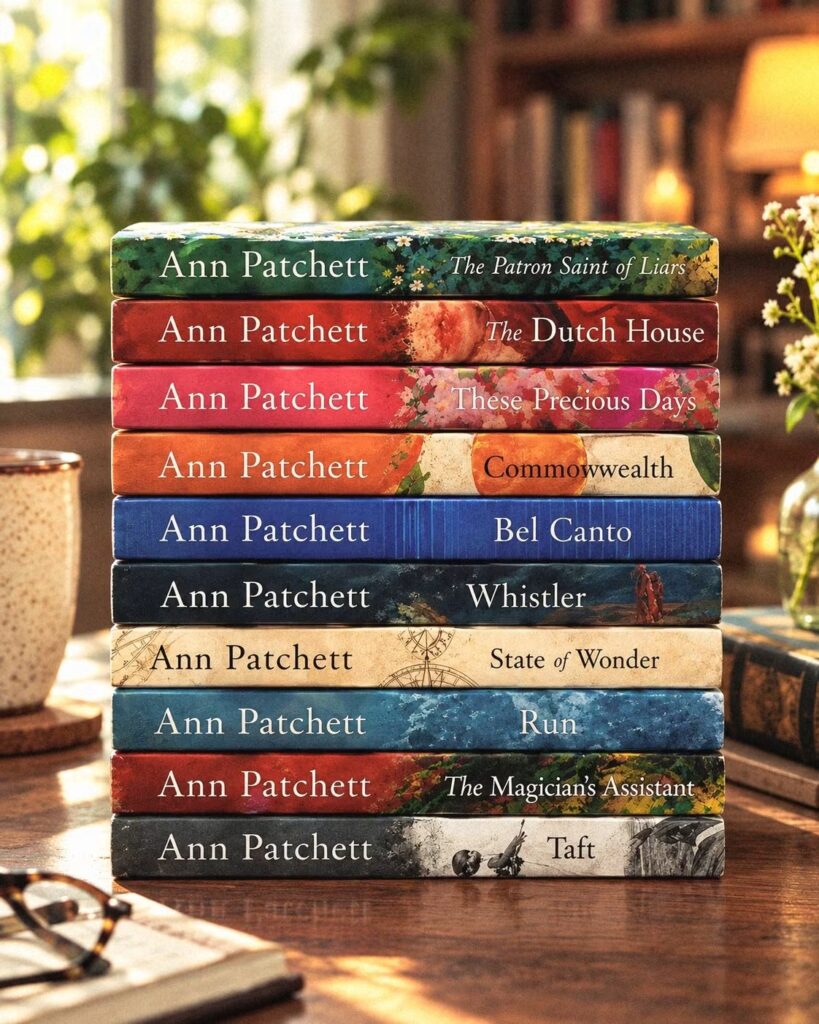
So I went looking for more. That’s how this stack began.
I read The Dutch House the week my brother and I had our worst fight about Dad’s things. Danny and Maeve, sitting in a parked car outside the house they lost, picking at the same old wound for decades. I put it down, picked up the phone, and called him. We didn’t fix everything. We started.
I read The Magician’s Assistant on the anniversary of the funeral. A woman who loved someone for twenty years, then learns after he’s gone that there were whole rooms of his life she’d never seen. I kept thinking of the stories people told me at Dad’s wake, things I never knew. It made me feel less robbed, and more curious.
I read Commonwealth and recognised every complicated, blended, half-related person who ever sat at our Christmas table. I read Run and State of Wonder and Taft and The Patron Saint of Liars, and slowly I noticed something. Ann Patchett writes about the same miracle again and again. People thrown together by accident, by tragedy, by a stranger walking in the door, who somehow become each other’s family.
That’s what had been happening to me. The friend with the sticky note. The neighbour who brought soup every Sunday. My brother, finally. I wasn’t alone. I’d just been too sad to see who had moved in around me.
Then I read These Precious Days, her essays, and found the one about her friend who came to stay during the pandemic while fighting cancer. I sat in my car outside the supermarket and sobbed so hard a stranger knocked on the window to check on me. I told her I was fine. I was, actually. I was finally grieving properly.
And this year, the last book in the stack. Whistler. A woman who spots her old stepfather across a gallery at the Met and finds her way back to him. Ann Patchett has said she wrote it while missing a dear friend who had died, imagining another life they might have shared. I read that and closed the book and just held it. Because that’s what I’d been doing for three years, without the words. Imagining. Missing. Loving him anyway.
Ten books. Thirty-four years of her work. Three years of my grief.
I don’t know how to explain what Ann Patchett did for me, except this: she reminded me that the people we lose leave doors open behind them, and other people walk through.
If you’re going through something right now and you can’t read, I understand. But when you’re ready, start with Bel Canto. Then keep going down the stack.
And if someone you love is hurting, leave a book on their doorstep. Don’t write a long note.
Just: Trust me.