
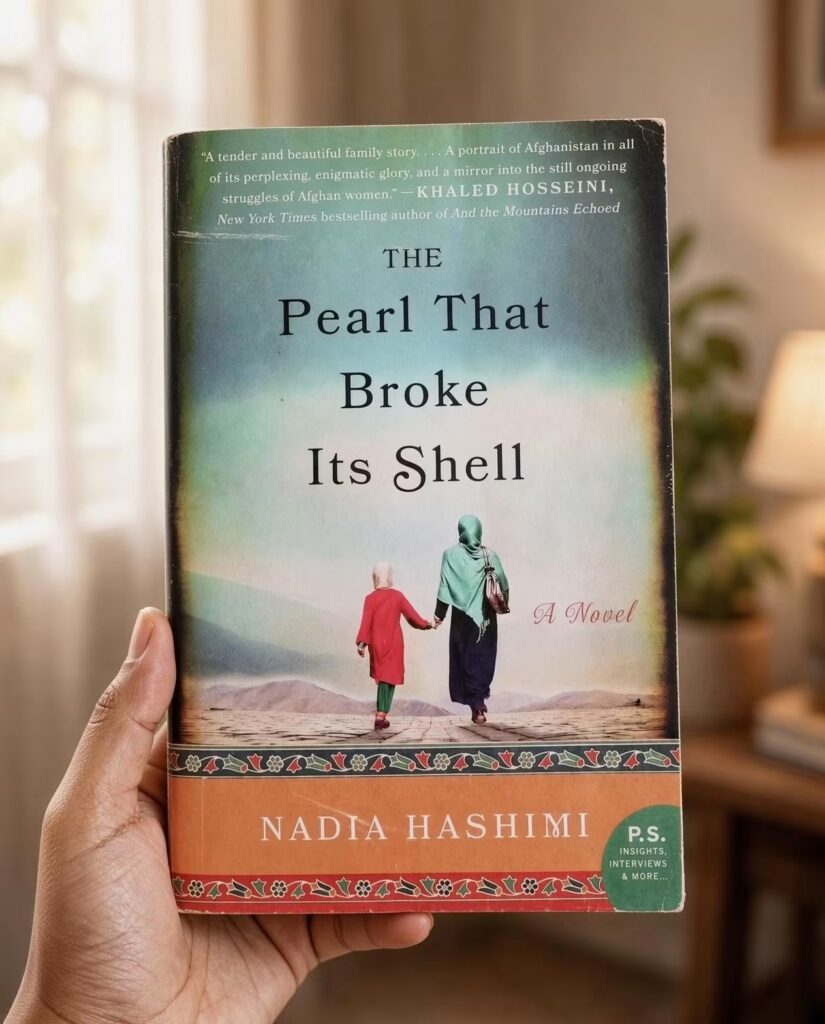
What if the only way to set your daughter free was to pretend she was never your daughter at all?
That’s the choice this book is built on, and the hardest part is that it’s real. In Afghanistan there’s an old custom – bacha posh – where a family with no sons can raise one of their girls as a boy. Cut her hair. Change her clothes. And just like that, the doors swing open. She can go to school. Walk to the market alone. Look people in the eye. She gets to be a whole person.
Until she grows up. Then they take it all back, and expect her to become a quiet, obedient woman as if she’d never once known what the other side felt like.
Nadia Hashimi took that heartbreak and built something you won’t be able to put down; two women, a hundred years apart, same blood, same trap.
First there’s Rahima, a girl in Kabul. Her father’s an addict, there are no boys in the house, and she and her sisters are barely allowed out the front door. So her mother makes her a bacha posh. And for a little while, Rahima gets to run. To breathe. To be “Rahim,” free and loud and alive.
And then she’s married off. She’s still a child. He’s a warlord, old enough to be her grandfather. And every bit of the freedom she tasted is gone – and she spends the rest of her days remembering it, the way you remember a person you loved and lost.
A hundred years before her, there’s Shekiba – her great-great-grandmother – orphaned, scarred, handed around like she’s furniture, who saves her own life by living as a man. Two women. Two lifetimes. The exact same cage. And in both of them, the exact same thing that refuses to die.
I’ll be honest with you: this book will make you cry. What these girls go through is brutal, and Hashimi doesn’t look away from it. There were pages I had to stop and just sit with for a moment.
But it never feels cruel for the sake of it. Because underneath all the pain is one stubborn thing that Hashimi is really writing about: these women do not break. When Rahima has nothing left, it’s her grandmother’s story that holds her up – she survived all that, so I can survive this. There’s a line I keep coming back to: the human spirit is harder than a rock, and softer than a flower petal. Both at once. That’s every woman in this book.
If “A Thousand Splendid Suns” stayed in your chest for years, clear a space for this one. Hashimi is telling the stories of women the world was never supposed to hear – and she tells them so well you’ll forget to look up.
Read it. Let it hurt a little. And then carry Rahima and Shekiba with you, the way they carried each other across a hundred years.